Fun Food Ideas To Help You Survive The School Holidays

When the school holidays roll around, the last thing that kids want to be eating is what they would normally find in their lunch boxes. Let’s admit it, there is just something about the festive season that turns the adorable little buggers into gremlins with and insatiable appetite.

To avoid Mum (and Dad) running out of options to please, here are some twists to the lunch box meal that is bound to make the holidays a little extra delicious.

fun-foodsPIZZA WRAPS
If you find yourself out of time to cook a healthy and filling dinner, try a homemade combination of the much-loved pizza and the healthy benefits of a health wrap. All you really need is pita bread, pizza sauce, ham, pineapple, (any toppings that your kid fancies) and of course, cheese! Your kid will love it. If you are feeling tired from pressures of juggling work and entertaining the kids, get the kids involved by making their own yummy creations. Make an enjoyable activity out of lunch or dinner time.

MAC AND CHEESE
Although it may already be a firm favourite in most homes, let’s add a twist to this familiar dish. Along with the cheese of your choice, try adding 1 finely chopped jalapeno and one teaspoon of coarse grain mustard. The added ingredients will leave palettes bursting with flavour.

BURGERS
Burgers are a mom’s favourite choice for the lunch box but here is an ingenious way to add some excitement to this lunch staple. Turn it festive by glazing your ordinary choice of burger patty with a good teriyaki sauce. I would suggest pan frying, or grilling, the burger until it is almost done. Baste with teriyaki sauce during the last two minutes of cooking. (Basting does not have to be limited to teriyaki. Be brave and mix it up!) Serve with homemade hot chips or a side salad. This will have lips smacking.

SALAD ROLLS
During the holidays, kids have little patience for complicated meals or table manners. The easiest option to satisfy hunger under these circumstances is a yummy cold salad roll. Whether it is the chicken from last night’s roast, ham slices, or Vienna’s, just toss it together with mayo, lettuce, finely chopped cucumbers, and onion. Serve in a fresh bread roll with cold fruit juice and tickle those taste buds.
This is a particularly good outdoor meal so why not take a blanket and make it a picnic.

Feeding the little ones are never a task that is over. For ideas for treats and desserts that will spread the Chirstmas cheer, stay tuned to our blog. Happy holidays everyone!
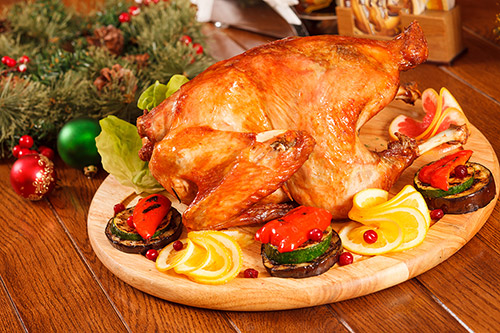
Why is turkey synonymous with the holidays

Turkey is a mainstay of the Thanksgiving dinner. But it’s not necessarily the best-tasting beast around, nor the cheapest. So how did turkey come to monopolize the holiday?

On Christmas, most of us will sit down to feast on a turkey dinner. How did we end up with the tradition of eating turkeys during the holidays?

Turkeys were fresh, affordable, and big enough to feed a crowd. Around the world, people have long preferred large poultry for celebrations because the birds could be slaughtered without a huge economic sacrifice.

xmas-turkeys-smallCows were more useful alive than dead, and commercial beef wasn’t widely available until the late 19th century. Chicken was more highly regarded than it is today, but rooster meat was tough, and hens were valuable as long as they laid eggs.

Venison would have been another option, especially during the 17th and 18th centuries, though it would have required you to hunt for your Christmas meal. There was plenty of ham or brined pork around, but it wasn’t considered fit for special occasions. Eating turkey was also in keeping with British holiday customs that had been imported to the New World.

Among the big birds, turkey was ideal for a feast. New born turkeys would spend about seven months eating insects and worms on the farm, growing to about 10 pounds by Christmas . They were cheaper than geese, which were more difficult to raise, and cheaper by the pound than chickens. Cost was an important factor for holiday shoppers, because people weren’t necessarily preparing just one meal; Christmas was the time to bake meat and other types of pies that could last through the coming months.

Although the tradition of turkey is most widely appreciated in the USA, it has become a staple addition to the dining table of families from all around the world.

Most holiday turkeys are stuffed with a bread-based mixture and roasted. Sage is the traditional herb added to the stuffing (also called dressing if NOT cooked inside the bird), along with chopped celery, carrots, and onions. Other ingredients, such as chopped chestnuts or other tree nuts, crumbled sausage or bacon, cranberries, raisins, or apples, may be added to stuffing. Deep-fried turkey is rising in popularity due to its shorter preparation time, but carries safety risks.

Cooking the perfect steak

Of all the dishes in the Chef’s kitchen, a great steak is undoubtedly, the tastiest of achievements. We all love it, but few of us have mastered the art of cooking it at home.

Thankfully, all it takes is some basic knowledge and you will be cooking steaks to rival your favourite steakhouse.

Know your Beef Grades

vacuum-packe_rump-steak_smlWhat are the different grades of beef, and what do they mean? Grades are largely based on the amount of marbling, which refers to the amount of fat in the meat. The more marbling, the more tender, juicy and flavourful the meat is. “Prime,” with its ample marbling, is the highest grade of meat, followed by “choice” and “select.” Prime meat is also younger than choice or select, which means the meat is usually more tender than that from older cattle.

Let It Warm Up

Take the steak out of the fridge. Leave it to rest for about an hour. This should be sufficient time for the cut to reach room temperature. Do not negotiate on this step as it could lead to disappointment. The outside will be charred and the inside will be mostly grey meat with a little nugget of red in the middle.

Consider the Thickness

Two to three centimetres is not just some arbitrary measurement when it comes to hefty cuts like rib eye or New York strip. This thickness ensures that your steak will achieve the perfect char on the outside just as the interior reaches the ideal temperature. For the best even cooked result, consider asking your butcher for the thickness of the steak cuts.

How to cook steak

How to grill steak: Cook the steak, covered, on the cool side of a charcoal grill. When it’s a few degrees short of your preferred doneness, move it to the hot side of the grill to sear on both sides.

How to cook steak in a skillet or pan: Add oil to your skillet or pan, and heat it over high heat until smoking. Add your seasoned steak, and cook it until a crust begins to develop. You can flip your steak without disturbing the sear; in fact, it will help your steak cook evenly. Add some butter after the first four minutes, then continue to cook and flip until the steak has reached your desired doneness.

Doneness

Doneness ranges from rare (with a red center) to well-done (with no pink in the center). Most experts will recommend not going above medium for most cuts, though it’s important that cuts with lots of fat and marbling are cooked at least past rare. Otherwise the fat in the marbling won’t render at all, and there’s no point in getting a well-marbled steak if it’s not going to break down enough to make your meat nice and juicy. Here are estimated temperatures needed to reach your desired cook.

Rare: Internal temperature of 46 – 48 degrees C before resting

Medium-rare: 48 – 54.5 degrees C

Medium: 60 degrees C

Medium-well: 65.5 degrees C

Well-done: 71 degrees C

Let it rest

Letting your meat rest allows its juices to redistribute, making the steak juicier throughout than if you were to cut right into it while it’s screaming-hot. Let your steaks sit for about 10 minutes before you cut into them.

And there you go, your cut-and-dried guide to buying and cooking steak. You’ll be amazed at how easy it is now to turn out a flavourful, succulent steak like a pro.